
Your host
Meet Dr. Mac
Meteorologist, Educator, Science Communicator
Dr. Mac is a meteorologist, educator, and science communicator whose career has centered on a deceptively simple question: how do you make complicated science understandable without making the science itself simplistic? That question has followed him through television meteorology, university classrooms, educational technology, and science communication, and it remains directly at the heart of The Climate Translation.
For Dr. Mac, good science communication is not about removing complexity. It is about helping people understand enough of that complexity to ask better questions, evaluate evidence, and make connections between the science and the world they experience every day.
Meteorologist
Knowing what the atmosphere is doing is only half the job.
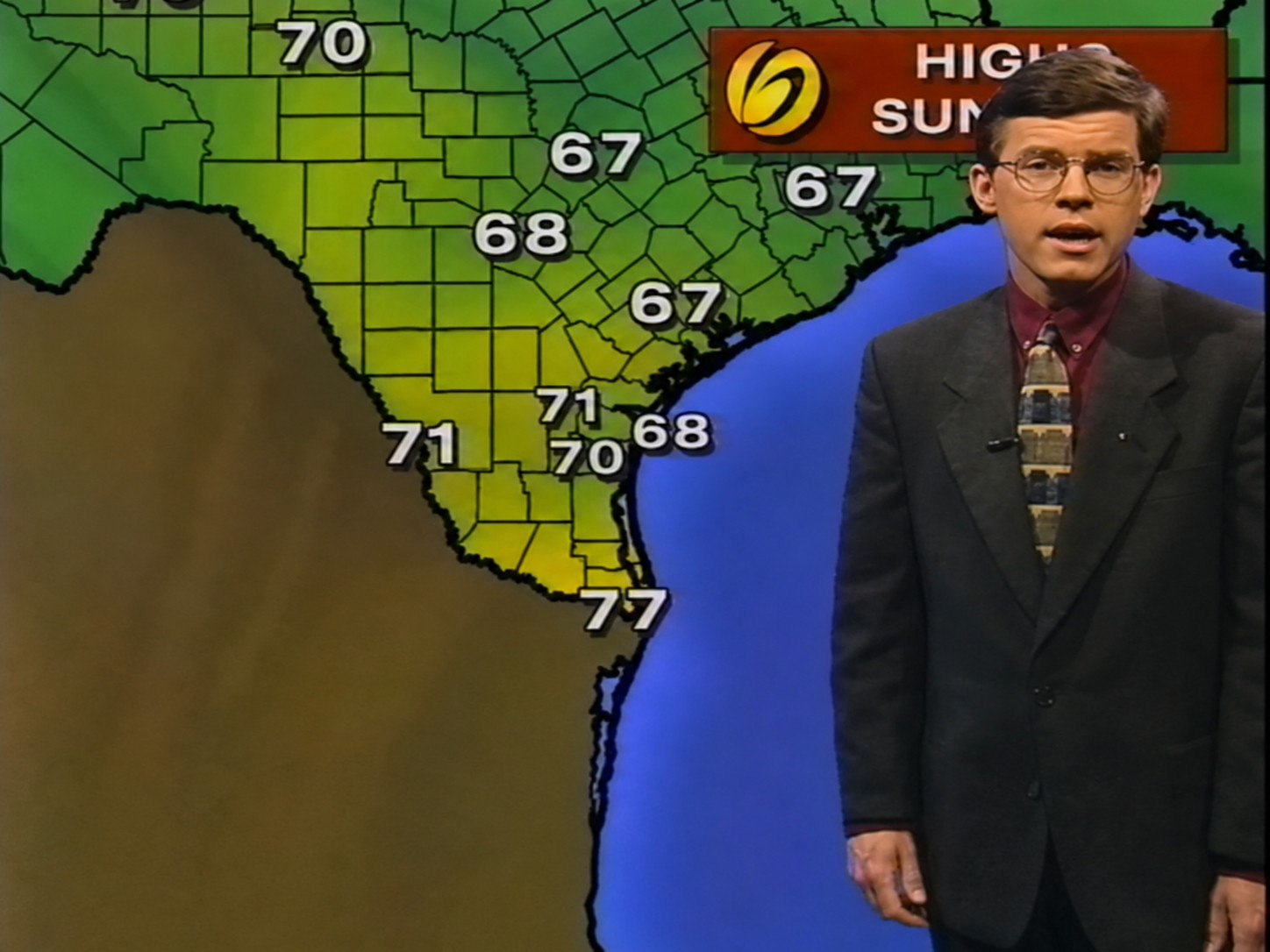
Weather has been part of Dr. Mac’s professional life for more than three decades. His early career included broadcast meteorology and work as a television meteorologist in South Texas, where forecasting meant understanding everything from Gulf moisture and sea breezes to tropical weather and severe thunderstorms.
Broadcast meteorology also taught an important lesson: knowing what the atmosphere is doing is only half the job. The other half is explaining it. A forecast may be built from satellite imagery, surface observations, computer models, atmospheric dynamics, and years of scientific training, but the person watching at home usually needs something much simpler:
That challenge of translating technical science into something useful and understandable would become a recurring theme throughout Dr. Mac’s career.
Educator
Understanding begins with curiosity.
Dr. Mac eventually carried those same questions into higher education. He has taught meteorology, Earth science, and related sciences at the university level and has spent much of his professional career working in education, curriculum, and science learning. He earned his Ph.D. in 2005, but the credential itself is less important to his teaching philosophy than what came after it: years of working with students who arrive with different experiences, different levels of scientific preparation, and different ideas about how the natural world works.
Some students love science, some are intimidated by it, some are skeptical, and some have simply never had anyone explain it in a way that connected with them. Teaching those students reinforced something that would later become central to The Climate Translation: understanding does not begin with memorizing terminology. It begins with curiosity.
Science Communication
The familiar can be a doorway into the science.
Science often develops its own language. That language is necessary, as scientists need precise terms to describe complicated processes, measurements, uncertainties, and relationships. However, the language that works inside a scientific paper does not always work outside one. Terms such as radiative forcing, ocean heat content, return interval, atmospheric circulation, or climate feedback can describe something important while still leaving a non-scientist wondering what any of it actually means.
Dr. Mac’s approach to science communication is to start somewhere more familiar: a hot sidewalk, a sea breeze, a thunderstorm, a shrinking reservoir, a city tree, or a flooded street. From there, he follows the science. The analogy or everyday observation is not a replacement for the science. It is the doorway into it.
Why Questioning Matters
Good science education should explain why the evidence matters.
Dr. Mac does not believe science education should require people to accept information simply because an expert says it is true. In his classroom, students are encouraged to question what they hear, and that includes what they hear from him. That does not mean every claim has equal evidence behind it. Rather, it means understanding why evidence supports one explanation better than another is an essential part of learning science.
The same philosophy guides The Climate Translation. When uncertainty exists, it should be acknowledged. When scientists are still working through a question, listeners should know that. When evidence is strong, the show should explain what makes it strong. And when a headline makes a scientific study sound more dramatic or certain than the research itself, it is worth slowing down and looking more carefully. Skepticism and curiosity are not problems for science. Used well, they are part of how science works.
Behind the Microphone
Several threads. One purpose.
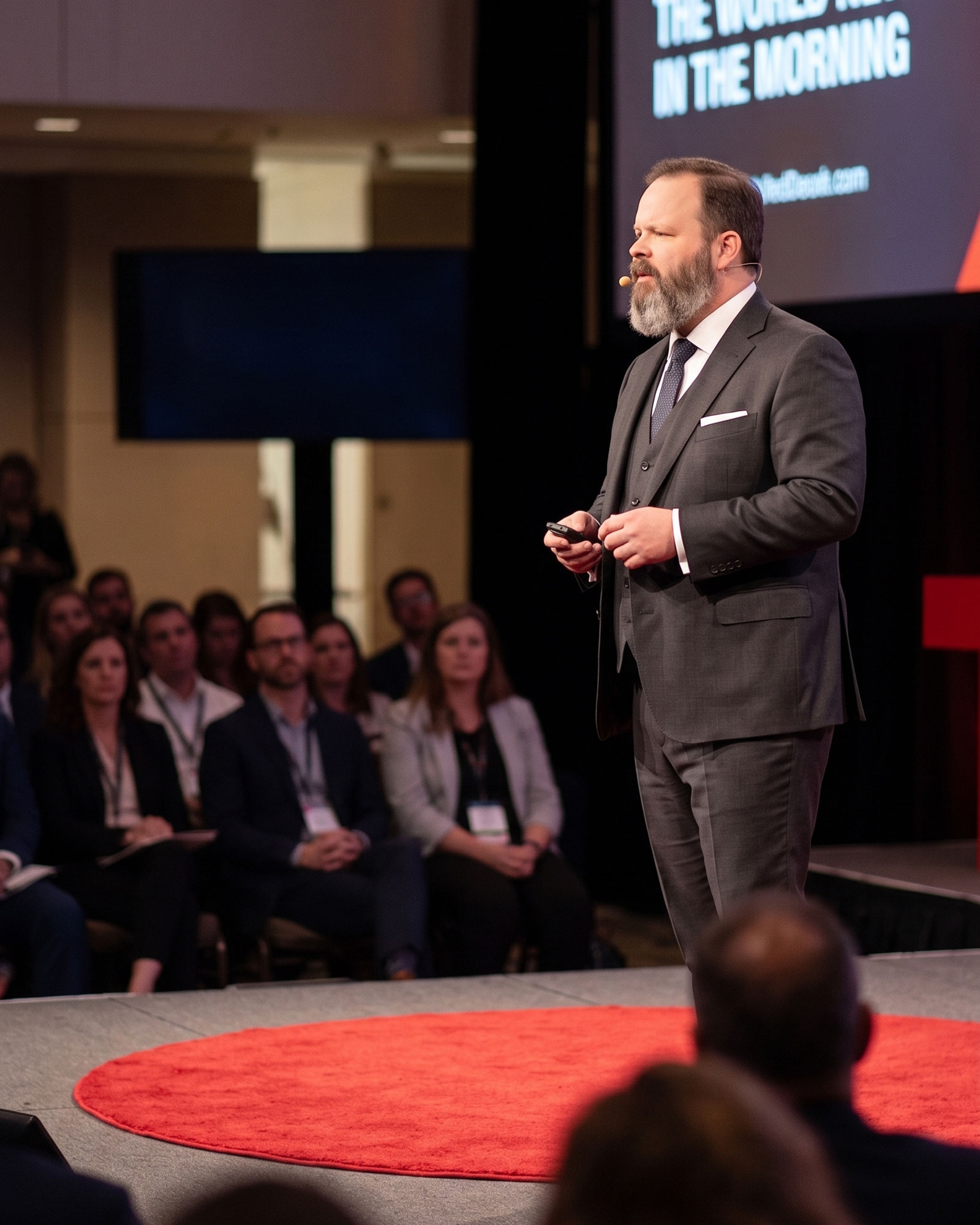
The Climate Translation brings together several threads that have run through Dr. Mac’s life and career: meteorology, broadcasting, education, and the challenge of explaining science clearly. Behind the microphone, the goal is much the same as it was standing in front of a weather map or working with students in a classroom: start with the question, understand the mechanism, follow the evidence, and explain it in a way that respects both the science and the listener.
There will always be more to learn. Climate science is an active field of research, and our understanding continues to develop as scientists gather new observations, improve models, test hypotheses, and sometimes discover that the Earth system is more complicated than we thought. That is part of what makes it interesting.

Get in Touch
Questions are welcome.
Questions are welcome, as are comments, corrections, episode ideas, interesting research, and different points of view. If an episode leaves you wondering about something, or if there is a climate question you think deserves a closer look, Dr. Mac would like to hear it.
TheClimateTranslation@gmail.com